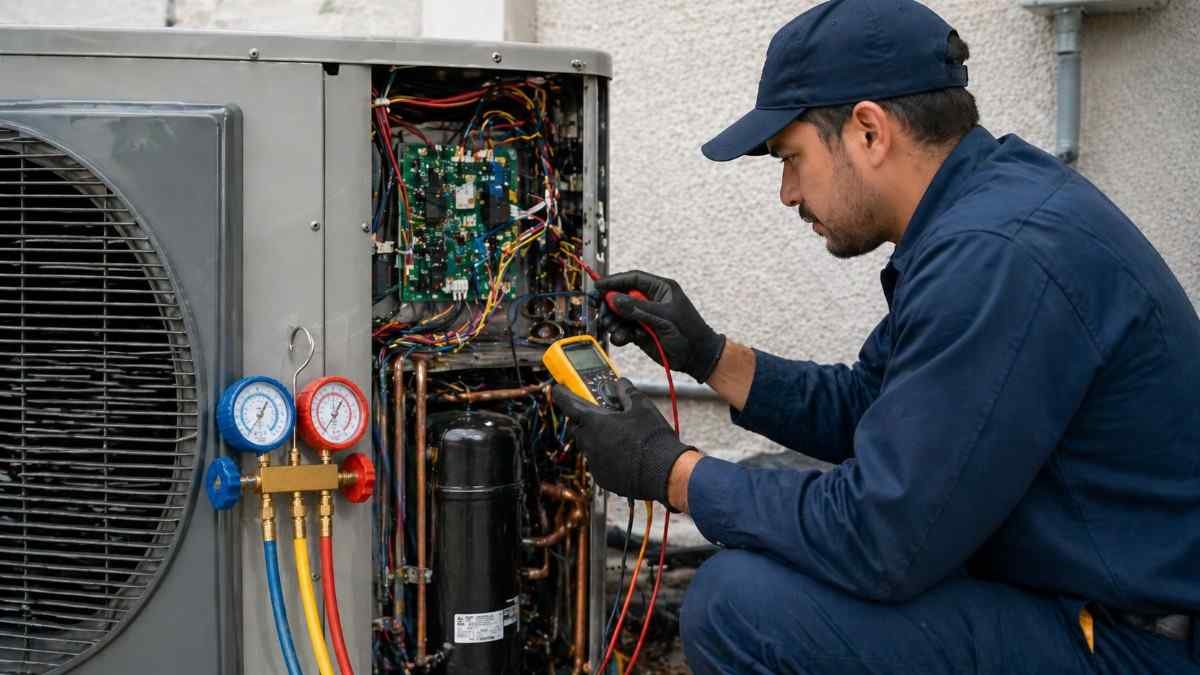
Cooling systems rarely fail without warning — the signs are usually there weeks before a breakdown, quiet enough to dismiss until the system stops working entirely on the hottest day of the year. Understanding what those signs mean, and what the repair process actually involves, changes how quickly and cost-effectively the problem gets resolved.
How Cooling Problems Develop Over Time
The Gradual Nature of System Decline
Most air conditioning failures aren’t sudden events. They’re the end point of a common air conditioner problems after a gradual decline that started months or years earlier. Refrigerant that’s been slowly leaking reduces cooling capacity incrementally. Coils that haven’t been cleaned in several seasons accumulate buildup that reduces heat transfer efficiency. Capacitors that are beginning to fail cause the compressor to work harder than it should, generating heat and wear that shortens its service life.
The pattern is consistent enough that a system that’s struggling to maintain temperature on a moderately hot day is almost always showing signs of a developing problem — not a one-time performance variation. Addressing it at that stage is almost always less expensive than waiting until the system fails completely.
How Heat Affects System Performance
Manufacturers rate air conditioning systems for performance under specific outdoor temperature conditions, and as temperatures rise above that baseline, the system loses its ability to maintain indoor comfort. A unit that performs well on an 85-degree day may struggle on a 100-degree day—not because it has failed, but because it is sized or operating at the limits of its capacity.
When a system that previously handled summer heat comfortably starts falling short at temperatures it used to manage without difficulty, that performance shift is a signal worth investigating before the season peaks.
Common Problems and What Causes Them
Refrigerant Issues
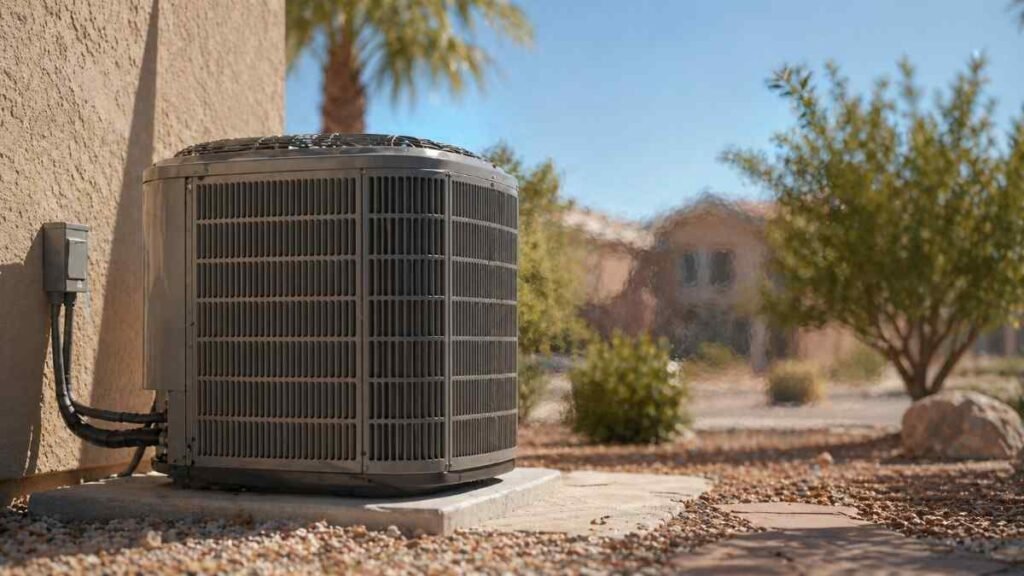
Refrigerant is the medium that carries heat out of the home — it absorbs heat from indoor air at the evaporator coil and releases it outside at the condenser coil. A system low on refrigerant produces less cooling per cycle, runs longer to reach the setpoint temperature, and in advanced cases produces ice buildup on the evaporator coil that further restricts airflow and cooling capacity.
Refrigerant doesn’t deplete through normal operation — a system low on refrigerant has a leak that needs to be located and repaired before the refrigerant is replaced. Adding refrigerant without fixing the leak is a temporary measure that delays the same problem returning within a season or two.
Capacitor and Electrical Component Failures
Technicians commonly replace capacitors in air conditioning systems, and their failure follows a predictable pattern—they gradually degrade with heat exposure and age until they can no longer supply the starting or running current the compressor and fan motors require.
A failing capacitor produces symptoms that are easy to confuse with other problems — slow startup, unusual sounds from the outdoor unit, and intermittent cooling — before the component fails entirely and the system stops running. Electrical issues beyond capacitors — failed contactors, corroded connections, and tripped circuit breakers — follow a similar pattern of gradual development that shows up as performance inconsistency before producing a complete failure.
Coil Contamination and Airflow Restriction
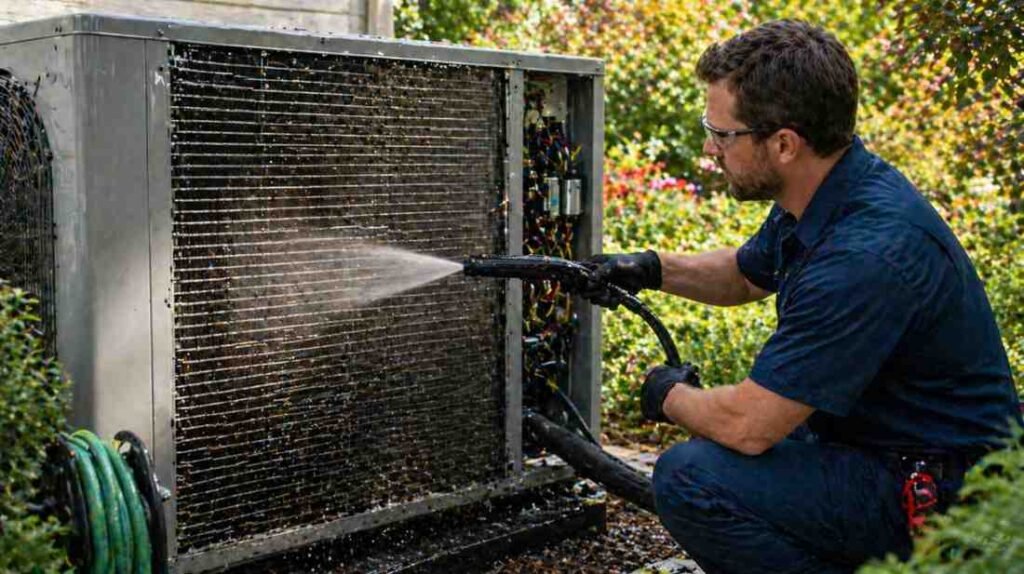
Both the evaporator coil inside the air handler and the condenser coil in the outdoor unit need to transfer heat efficiently to keep the system operating within its design parameters. Evaporator coils accumulate dust and debris that reduces airflow and insulates the coil surface from the air it’s supposed to be cooling. Condenser coils collect dirt, pollen, and organic matter that reduces the rate at which the system can reject heat to the outdoor air.
A dirty evaporator coil produces higher indoor humidity, reduced cooling capacity, and in severe cases, coil icing that shuts the system down. A dirty condenser coil forces the compressor to work at higher pressures and temperatures, accelerating wear and increasing the likelihood of compressor failure — the most expensive repair in any cooling system.
Thermostat and Control Issues
Not every cooling problem originates in the mechanical components of the system. Thermostat calibration errors, failed sensors, and wiring issues between the thermostat and the air handler produce symptoms — short cycling, failure to reach setpoint, and system lockout — that look like equipment failures until a technician traces the problem to the control side of the system.
Smart thermostats that lose their connection to the system or use incorrect wiring configurations now drive a growing number of service calls, but technicians can resolve these issues quickly once they identify the control problem.
What the Repair Process Involves
Diagnosis Before Parts
A repair process that starts with parts replacement rather than diagnosis is one that frequently replaces the wrong component. A thorough diagnostic process measures system pressures, checks electrical components for correct operation, inspects coil condition, verifies airflow through the system, and identifies the actual cause of the reported symptom rather than the most common cause of that symptom category.
The difference between a technician who diagnoses before recommending repairs and one who defaults to the most common fix matters financially — a misdiagnosed repair that doesn’t resolve the problem still carries a labor charge, and the actual problem still needs to be addressed afterward.
Repair Versus Replacement Decisions
Not every repair is the right financial decision relative to system replacement. A compressor failure on a system that’s fifteen years old, low on refrigerant, and running on aging electrical components may cost more to repair than the remaining service life of the system justifies. A capacitor replacement on a five-year-old system in otherwise good condition is straightforwardly worth doing.
The factors that inform that decision — system age, overall condition, repair cost relative to replacement cost, and the efficiency difference between the current system and a new one — are ones a technician should present clearly rather than defaulting to a repair recommendation regardless of circumstances.
What to Expect From a Service Call
Homeowners in Midvale looking for AC repair benefit from working with a technician who arrives with the diagnostic equipment to assess the full system rather than just the reported symptom, who communicates findings clearly before recommending repairs, and who can explain the trade-offs between repair options when more than one path is available.
When a technician clearly explains what they found, what they fixed, and what the system’s condition means for future maintenance, they give the homeowner the information needed to make informed decisions—not just a repaired unit and an invoice.
Preventive Maintenance and What It Actually Prevents
Annual Service and Its Return
Annual air conditioning service — cleaning coils, checking refrigerant charge, inspecting electrical components, smart home upgrades, and verifying system operation — catches the developing problems that produce mid-season failures before they progress to the point of requiring emergency repair. The cost of annual maintenance is consistently lower than the cost of the repairs it prevents, and it extends equipment life in ways that deferred maintenance doesn’t.
Filter Maintenance Between Service Calls
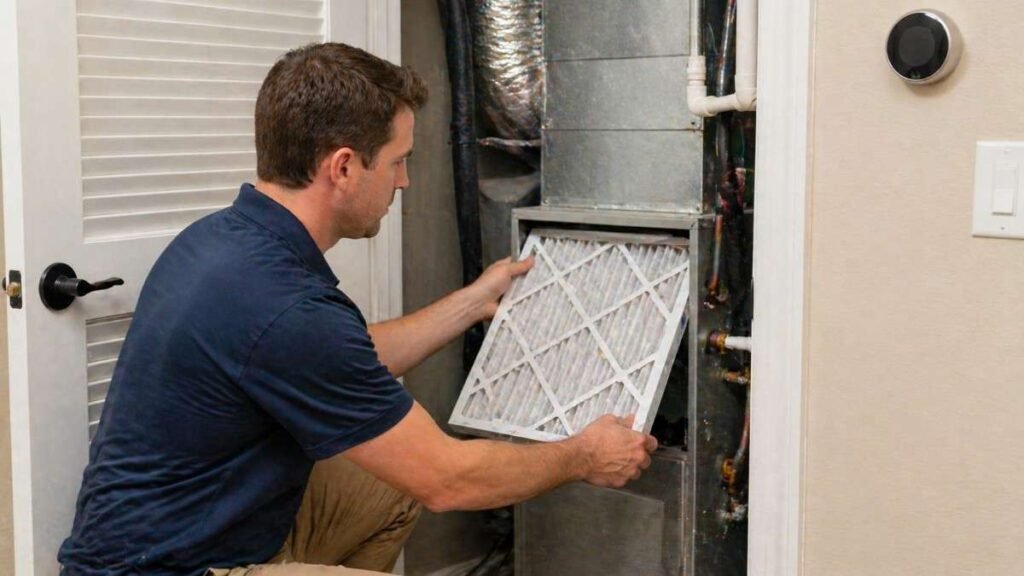
Filter replacement is the one maintenance task homeowners can perform between service visits that has the most direct impact on system performance and longevity. A clogged filter restricts return airflow in ways that reduce cooling capacity, increase energy consumption.
And accelerate the coil contamination that requires professional cleaning to address. Checking and replacing filters on the manufacturer’s recommended schedule is the simplest and least expensive contribution a homeowner can make to system reliability.
Conclusion
When you maintain an air conditioning system consistently and repair issues early, it performs reliably through seasons that would cause a neglected system to fail. Getting ahead of developing problems — rather than waiting for a breakdown — is what keeps repair costs manageable and the home comfortable when outdoor temperatures make that comfort matter most.