Pickleball has moved faster from recreational pastime to serious competitive sport than almost any other game in recent history. At the top of that competitive structure sits a tournament that draws the best players from across the globe — and understanding what makes that level of play distinct from the recreational game most people know is what makes watching it genuinely compelling.
How Competitive Pickleball Reached the World Stage
The Sport’s Rapid Rise
Pickleball’s growth trajectory over the past decade has been unlike anything the racket sports world has seen. From community center courts and retirement communities, it expanded into dedicated facilities, professional leagues, and international federations faster than the infrastructure to support it could be built.
That growth created the competitive ecosystem that now produces players whose athleticism, strategy, and shot-making would be unrecognizable to someone who last played the sport casually a few years ago.
The Development of International Competition
As the sport’s player base expanded globally, the competitive structure followed. National championships created pathways for identifying top talent. International federations established standardized rules and sanctioned tournaments that allowed players from different countries to compete on common ground.
The result is a competitive landscape where players from the United States, Spain, Brazil, India, and dozens of other countries now compete at the highest levels — bringing playing styles and strategic approaches shaped by different athletic traditions.
What Makes Elite Pickleball Different
The Physical Demands at the Top Level
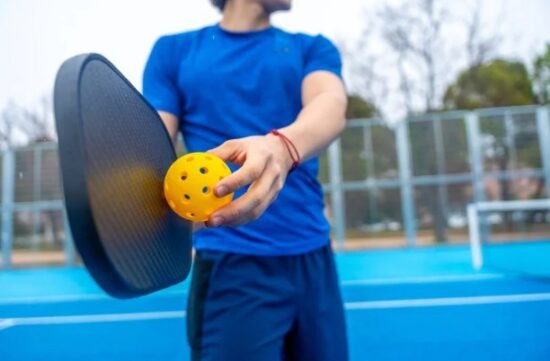
Recreational pickleball is accessible precisely because its physical demands are manageable across a wide range of fitness levels and ages. Elite pickleball looks different. The reaction times required at the non-volley zone in professional play are measured in fractions of a second.
Lateral movement, explosive first steps, and the ability to sustain high-intensity rally exchanges across a full match day — including singles, doubles, and mixed doubles — require conditioning that the casual game doesn’t suggest.
The Strategic Complexity
The strategic layer of elite pickleball extends well beyond shot selection. Stacking formations in doubles, targeting specific opponents in mixed doubles, managing pace to force errors rather than hitting winners outright, and the psychological dimension of dinking exchanges that can extend for dozens of shots before either player creates an opening — these elements of the game are invisible to spectators who haven’t played enough to recognize what they’re watching.
Understanding those elements — even at a basic level — changes the viewing experience significantly. A long dinking exchange that looks like stalemate from the stands is actually a high-stakes chess match being played at real-time speed.
Equipment and Court Conditions at Championship Level
Competitive play at the highest level involves equipment specifications and court standards that differ from recreational settings. Paddle construction — core material, surface texture, and weight distribution — affects the shot characteristics available to a player in ways that matter at elite speeds and margins. Court surface, lighting, and wind conditions at outdoor venues all affect game style in ways that top players account for in real time.
The Structure of World-Level Competition
Singles, Doubles, and Mixed Doubles
World-level competition typically encompasses all three formats — singles, doubles, and mixed doubles — each of which rewards somewhat different combinations of athleticism and strategic acumen. Singles play emphasizes individual athleticism and court coverage.
Doubles requires communication, formation discipline, and the ability to function as a cohesive unit under pressure. Mixed doubles adds a strategic dimension around targeting and partner coordination that makes it one of the more tactically complex formats in racket sports.
Age and Skill Divisions
Elite open division competition represents the pinnacle, but world-level tournaments typically include age-division competition that allows players at different stages of their athletic careers to compete against peers.
Senior divisions attract former open-division competitors whose experience and strategic sophistication often produce a quality of play that’s tactically richer than open division matches, even when the athleticism has evolved with age.
The Points and Qualification Structure
Access to the world pickleball championship level isn’t open to anyone who wants to enter — it’s earned through a qualification structure that includes national championships, sanctioned tour events, and ranking points that determine who competes at the top of the draw.
Understanding that pathway — and what it takes to navigate it — provides context for the level of commitment that the players at the top of the bracket have made to reach that position.
What to Expect as a Spectator
The Fan Experience at Major Events
World-level pickleball events have evolved significantly in their production value and spectator experience. Center court matches at major events now feature professional broadcasting, commentary that provides strategic context, and crowd energy that reflects the sport’s expanding fan base.
Following the Sport Between Major Events
The competitive pickleball calendar between major championships offers consistent opportunities to follow top players and track ranking developments. Tour events throughout the year allow fans to see elite competition in venues that are often more accessible than the championship events themselves, and they provide context for understanding which players are in form heading into the major competitions.
What to Expect as a Competitive Player
The Gap Between Club and Elite Play
Competitive club players who watch elite pickleball for the first time often report that the speed of the game — particularly at the kitchen line — is the most striking difference from their own experience.
The margin for error in professional exchanges is narrower than recreational play suggests, and the consistency with which top players execute under pressure across a full match day reflects a practice volume and competitive experience that the recreational game rarely produces.
The Pathway for Serious Players
For players with serious competitive ambitions, understanding the sanctioned tournament structure and ranking system that leads toward world-level competition is the starting point. Local and regional tournaments build the experience and ranking points that open access to national competition, which in turn determines who competes at the highest level.
The pathway is well-defined — navigating it successfully requires both the competitive results and the logistical commitment that serious tournament play demands.
Conclusion
The highest level of competitive pickleball represents something genuinely distinct from the recreational game that introduced most players to the sport — a combination of athleticism, strategic depth, and competitive intensity that rewards serious attention from anyone who wants to understand what the game is capable of producing at its best.