If you’ve ever wondered why do cats make biscuits, you’re not alone. This adorable kneading motion—where cats rhythmically push their paws into a blanket, pillow, or your lap—goes far beyond cuteness. As someone who has worked with feline behavior and consulted for pet owners over many years, I can tell you that kneading is a deeply instinctive and emotional behavior that reveals a lot about how cats feel.
This article breaks down the real reasons cats knead, what it means when they knead on you specifically, how to interpret different kneading styles, and what to do if the claws become a bit too sharp for comfort.
What Does the Kneading Motion Mean?
Cats are emotional communicators through body language—not sound. Kneading is one of the strongest signals of emotional comfort and satisfaction. A cat will typically make biscuits when they feel:
- safe
- relaxed
- bonded with a human
- ready for sleep
- fully content
In fact, some cats knead in combination with purring, half-closed eyes, drooling, or soft chirps—all signs of maximum relaxation.
The Origins: Kneading Starts in Kittenhood
As kittens, cats knead their mother’s belly to stimulate milk flow. This very early life behavior is associated with:
- nourishment
- warmth
- security
- maternal bonding
Even after they mature and leave their mother, the motion remains psychologically comforting, almost like a human hugging a pillow or fidgeting with an object.
The Main Reasons Cats Make Biscuits
Below are the most common scientifically-understood explanations for kneading:
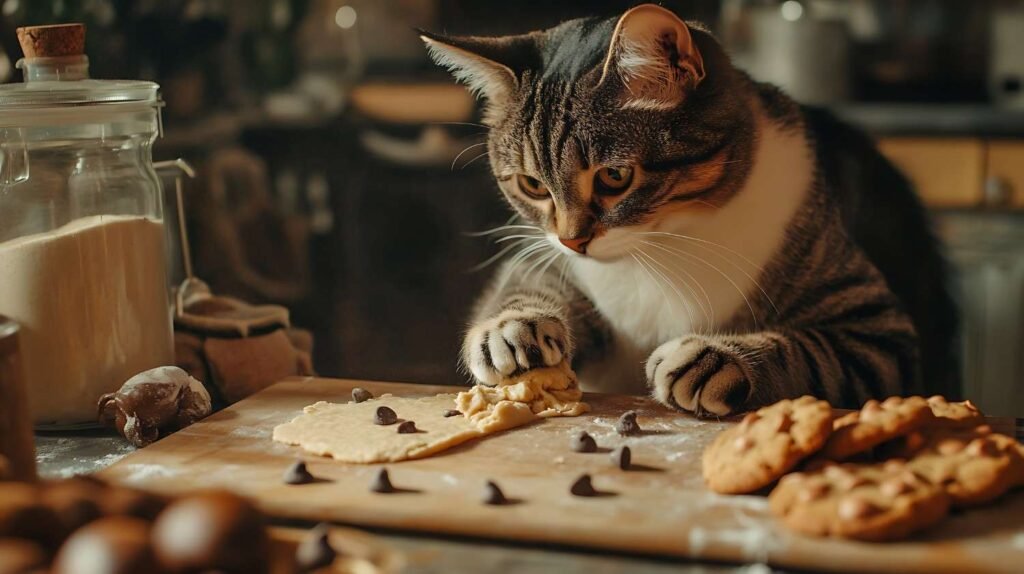
1. Comfort and Happiness
Kneading is usually a calming, self-soothing motion. Cats often do it:
- on a favorite human
- on their sleeping spot
- on soft materials
If a cat kneads on you, you should consider it a compliment—they trust you and associate you with safety.
2. Scent Marking (Territory Claiming)
Cats have scent glands in their paws. Kneading releases pheromones onto:
- your clothes
- your bedding
- your legs
- the couch
This is a furry way of saying:
“This belongs to me.”
3. Preparing a Sleeping Spot
In the wild, cats would knead grass or foliage to flatten it and create a temporary nest. Indoor cats retain this instinct, pressing down blankets or pillows to make them “just right” for sleeping.
4. Muscle Stretching
Kneading also helps cats stretch their:
- paws
- tendons
- forelimbs
- shoulders
It’s the same way people stretch their arms after sitting still for a long time.
5. Maternal Instinct in Female Cats
Some female cats knead more when they are in heat due to hormonal changes. It can be connected to reproductive behavior and internal emotional shifts.
6. Bonding and Affection
When cats knead on people, it’s one of the strongest forms of feline affection.
A kneading cat is saying:
- “I feel safe with you.”
- “You are part of my family.”
- “You remind me of comfort and love.”
Quick Comparison: What Different Kneading Situations Mean
| Where Your Cat Kneads | Likely Meaning | Interpretation |
| On your lap | Emotional trust | Strong bond; you’re “their person” |
| On blankets or furniture | Comfort & nesting | Preparing for sleep |
| On other animals | Social bonding | Trust and companionship |
| On the floor or firm surfaces | Habit or muscle stretching | Physical relief |
| While purring loudly | Deep contentment | Emotional relaxation |
| While gently biting or suckling | Kitten-like comfort | Nursing-memory behavior |
| With claws out | Intensity or excitement | Maybe trim nails soon |
This table helps you quickly analyze kneading variations based on context.
Why Do Some Cats Knead More Than Others?
Just like humans, cats have different personalities. The frequency of kneading can depend on:
- early-weaning (cats taken from mother young often knead more)
- emotional temperament
- stress-relief habit
- strong scent-marking instincts
- breed tendencies (Ragdolls and Siamese often knead more)
If your cat kneads frequently, it’s a sign of a secure, emotionally expressive cat.
What If the Kneading Hurts?
Sometimes kneading means claws—sharp little hooks—pressing into sensitive skin. If your cat loves making biscuits on your bare legs, here’s how to fix it:
Trim their nails
Regular nail trimming reduces discomfort dramatically.
Add a barrier
Place a folded blanket or towel across your lap.
Gently reposition them
Move them slightly to a softer area rather than rejecting them entirely.
Never scold or punish
Kneading is a positive emotional expression. Negative reinforcement can damage trust.
Should You Ever Stop a Cat from Kneading?
Only if:
- it’s painful
- they’re kneading a fragile object
- it becomes compulsive or anxiety-driven
Otherwise—let them enjoy their biscuit-making ritual. It’s a sign of deep relaxation.
Kneading vs. Other Cat Kneeling Behaviors
People sometimes confuse kneading with other motions. Here’s the key difference:
- Kneading: alternating paw pressure
- Plucking: tiny pulling motions on fabric
- Paw-padding: slow pressing motion when anxious
- Bunting: head butting as a love gesture
Understanding these behaviors helps you read your cat more accurately.
Frequently Asked Questions
1. Do all cats knead?
Most do, but not all. Some express comfort through head-butting, purring, stretching, or rubbing instead.
2. Why does my cat drool when kneading?
Because it triggers kitten-like satisfaction—the same neurological calmness associated with nursing.
3. How do I stop painful kneading?
Trim nails, add a lap blanket, or gently shift the cat to a padded spot.
4. Is kneading ever a sign of stress?
Rarely. If the kneading is frantic or constant and paired with pacing or vocalizing, it may be a stress habit. Otherwise, it’s happy behavior.
Final Thoughts: Kneading is Love in Motion
So, why do cats make biscuits? Because the motion is rooted in kittenhood, connected to nourishment and motherly warmth, and emotionally tied to comfort, love, and bonding. When a cat kneads, especially on you, it’s one of the purest expressions of feline trust.
Your cat is telling you:
“I feel safe, loved, and at peace right here.”