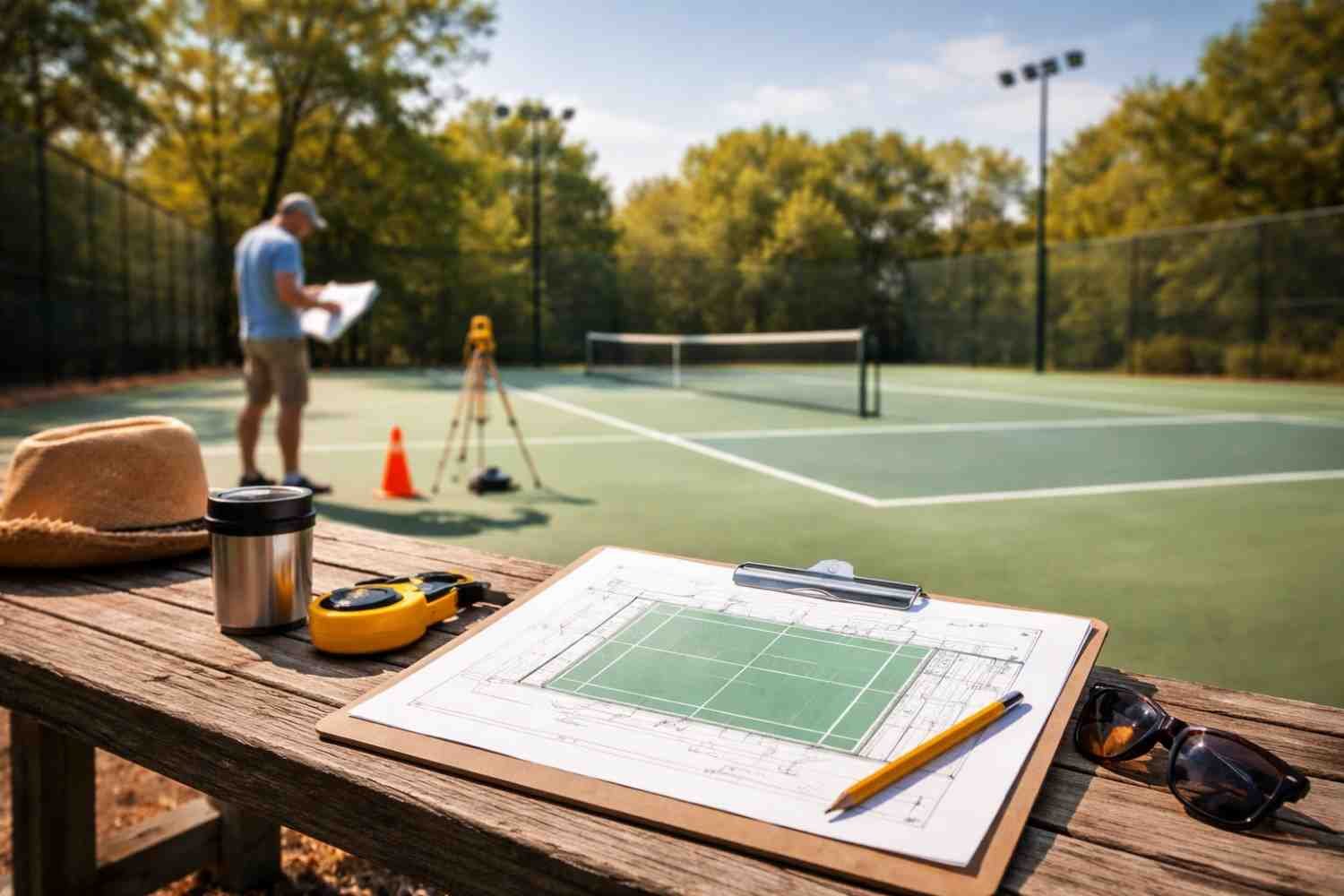
Building a private sports facility requires careful preparation and a deep understanding of basic construction elements. You cannot simply lay down a slab of asphalt and start swinging a racket. Creating a durable, enjoyable playing surface demands strategic decision-making long before the first shovel hits the dirt. This guide breaks down the essential steps to design a facility that meets your athletic needs. We will cover how to select the ideal spot, map out the playing dimensions, and install highly effective illumination.
Choosing the Perfect Location
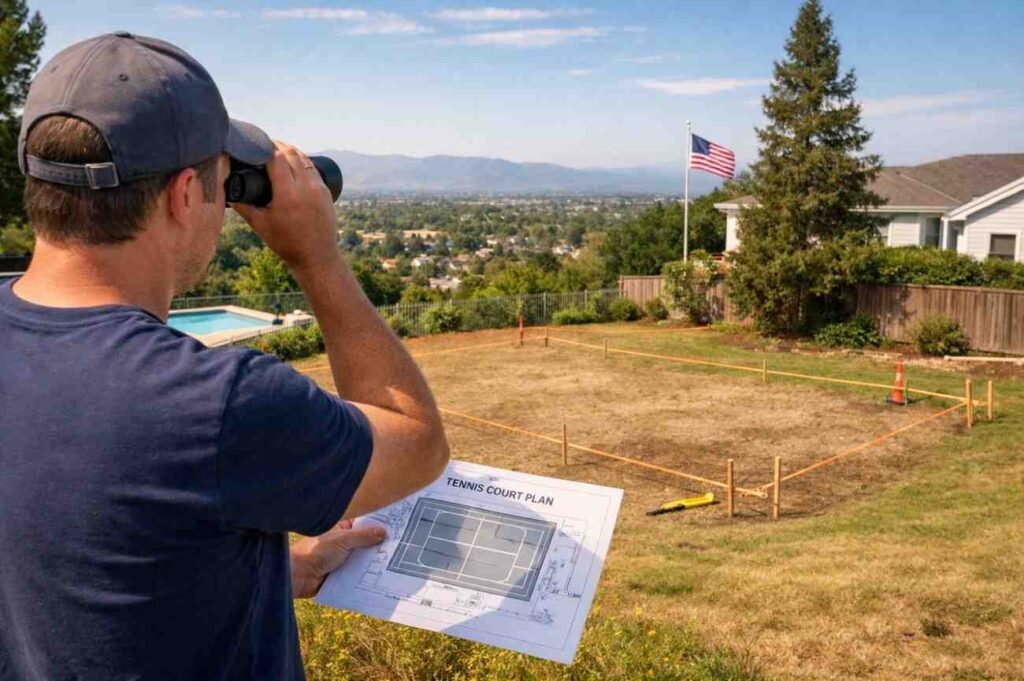
Finding the right spot on your property serves as the absolute foundation for a successful build. You must evaluate the physical characteristics of the land to ensure long-term structural stability.
Assessing Space Requirements
A standard well-maintained play area requires a footprint of at least 60 feet by 120 feet. This measurement includes the necessary runoff zones behind the baselines and outside the sidelines. Players need plenty of room to chase down wide serves and deep lobs safely. You also need to factor in space for perimeter fencing. A standard chain link enclosure usually sits ten feet high to keep errant shots contained. Always measure your available yard space multiple times to confirm you have enough clearance from property lines.
Evaluating Soil and Drainage
The earth beneath your facility dictates its overall lifespan. Soft or expansive soils shift over time, causing massive cracks in the surface above. Hiring a geotechnical engineer to test the dirt helps you avoid costly foundational failures. Furthermore, you must grade the land properly to direct rainwater away from the playing zone. A standard hard surface typically features a slight slope to force moisture off the sides. Pooling water damages the foundation and creates dangerous, slippery conditions for athletes.
Designing the Court Layout
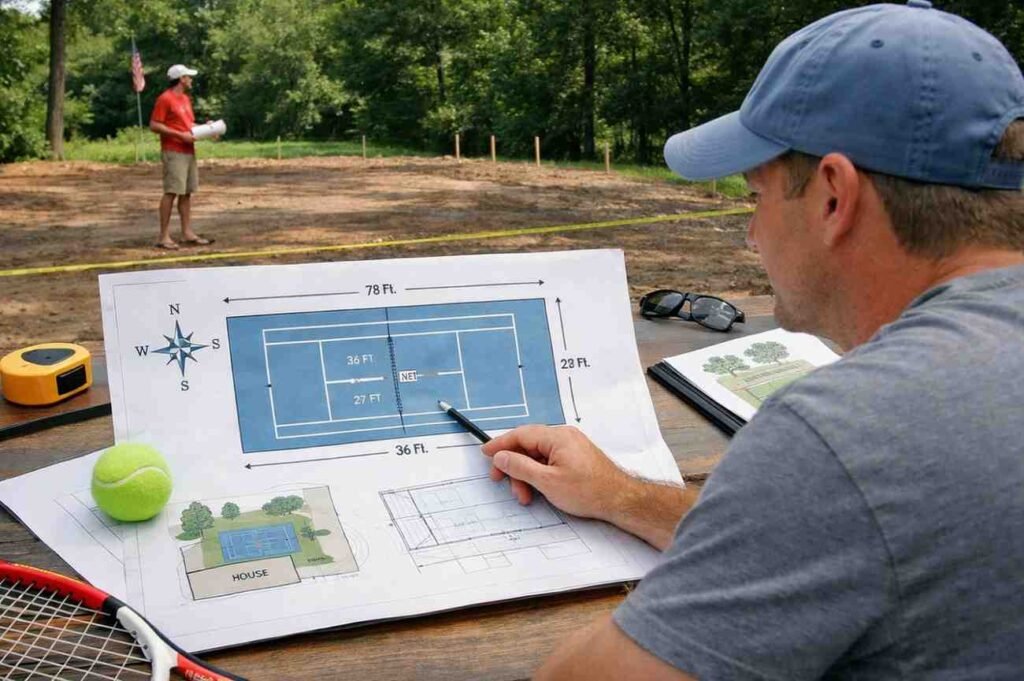
Once you secure the perfect plot of land, you must finalize the structural design. The orientation and material choices directly impact how the game feels and how often you can play.
Optimizing Court Orientation
The sun plays a massive role in all outdoor sports. Builders highly recommend aligning the length of the playing area in a true north-to-south direction. This orientation keeps the rising and setting sun out of the players’ eyes during early-morning and late-afternoon matches. Proper alignment ensures both competitors face fair visual conditions throughout the entire day. Additionally, consider the prevailing winds in your region to determine if you need protective windscreens.
Selecting the Right Surface
You can choose from hard concrete, clay, or synthetic grass options. Hard surfaces offer low maintenance and consistent ball bounce, making them incredibly popular. Clay provides a softer landing that protects joints but requires daily grooming and watering. Over time, heavy use and harsh weather degrade any material you choose. When cracks and fading appear, relying on professional maintenance, such as tennis court resurfacing in Utah, restores the crisp look and safe traction of your facility. Carefully weigh the initial installation cost against the long-term upkeep of each material.
Illuminating Your Court with Proper Lighting
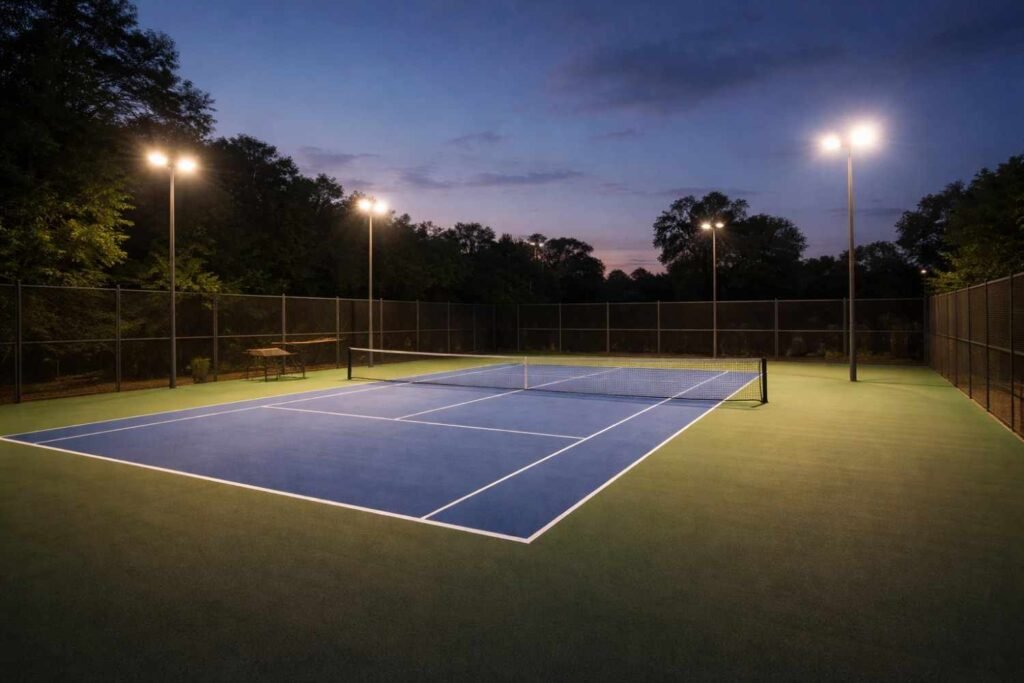
Adding lights extends your playing time well past sunset. A well-designed illumination system keeps the action going safely into the night, maximizing your investment.
Ensuring Uniform Light Distribution
Shadows and dark spots make tracking a fast-moving ball nearly impossible. You need fixtures that provide even brightness across every square inch of the playing zone. LED sports lights currently offer the best performance for residential setups. Placing poles at the corners and along the sides at a height of at least twenty feet prevents harsh glare from blinding the competitors.
Controlling Light Spill
Bright sports lamps can easily annoy your neighbors if not aimed correctly. Modern LED fixtures come with advanced visors and precise optics to keep the light contained exactly where you need it. This containment reduces light pollution and keeps your property energy efficient. You save money on electricity while maintaining a positive relationship with the surrounding community.
Conclusion
Taking the time to plan out the location, layout, and lighting guarantees a superior athletic experience. A flat, well-drained foundation prevents structural disasters and costly repairs. Strategic north-to-south orientation and high-quality materials keep the game fair and fun for all participants. Finally, professional illumination allows you to enjoy your investment at any hour of the day or night. A carefully constructed facility provides decades of healthy activity and unmatched convenience right in your own backyard.