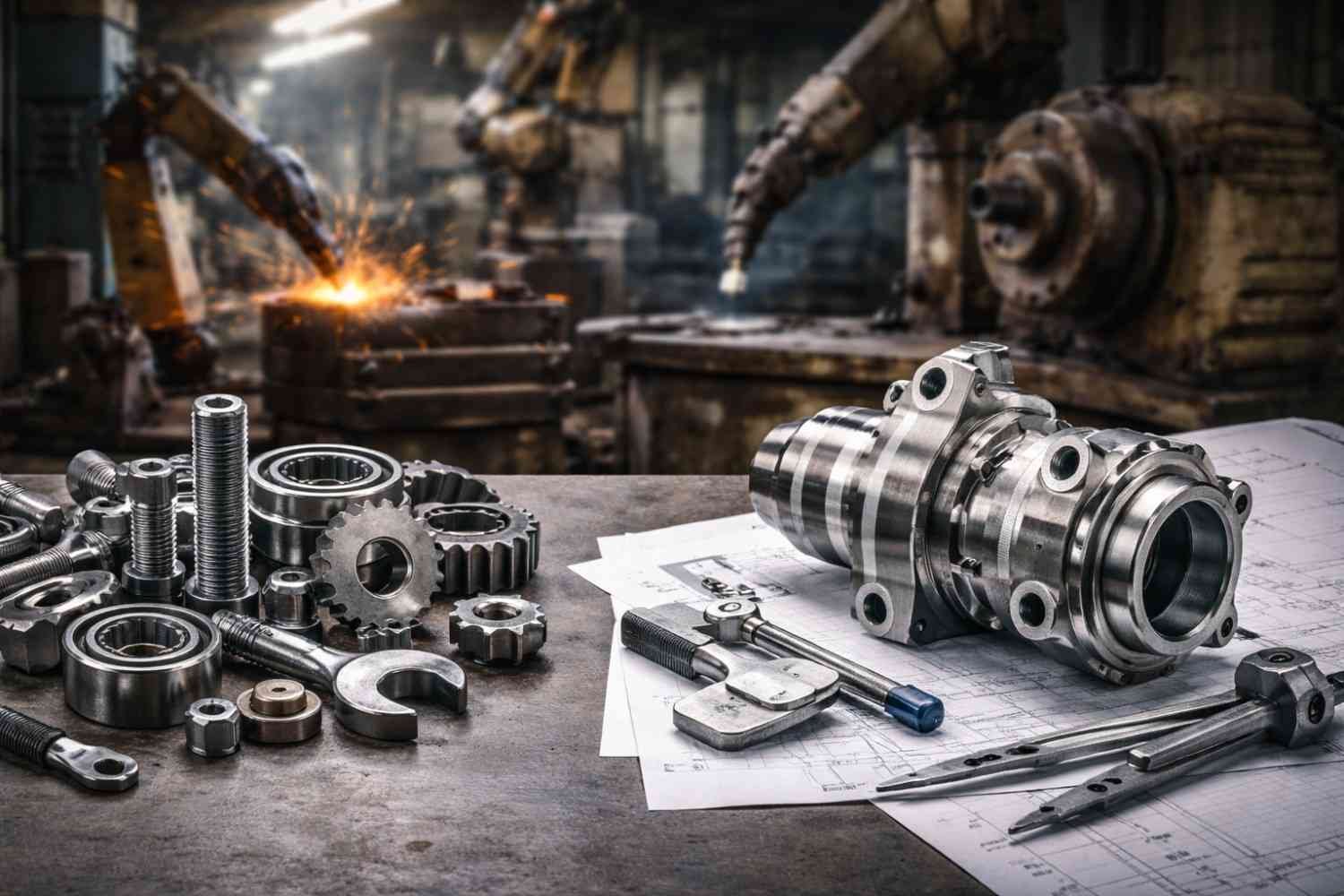
In the world of modern manufacturing, efficiency and cost-effectiveness often drive the decision-making process. For many engineers and procurement managers, this leads to a heavy reliance on standard, off-the-shelf parts. These components are readily available, budget-friendly, and generally reliable for general-purpose applications. They serve as the backbone for countless assembly lines and products, allowing businesses to scale production without reinventing the wheel every time a bolt or shaft is needed.
However, as industries push the boundaries of technology and performance, the “one-size-fits-all” approach frequently hits a wall. Standard parts are designed for standard problems. When a project involves extreme conditions, unique geometries, or zero-failure tolerance, browsing a catalog simply won’t suffice.
Relying on generic components in these high-stakes scenarios can lead to catastrophic failures, costly downtime, and compromised safety. By understanding the limitations of mass-produced hardware, manufacturers can better identify when it is time to transition to custom-engineered solutions. Here are five manufacturing problems that standard parts just can’t fix.
1. Extreme Environmental Stress and Temperature Fluctuations
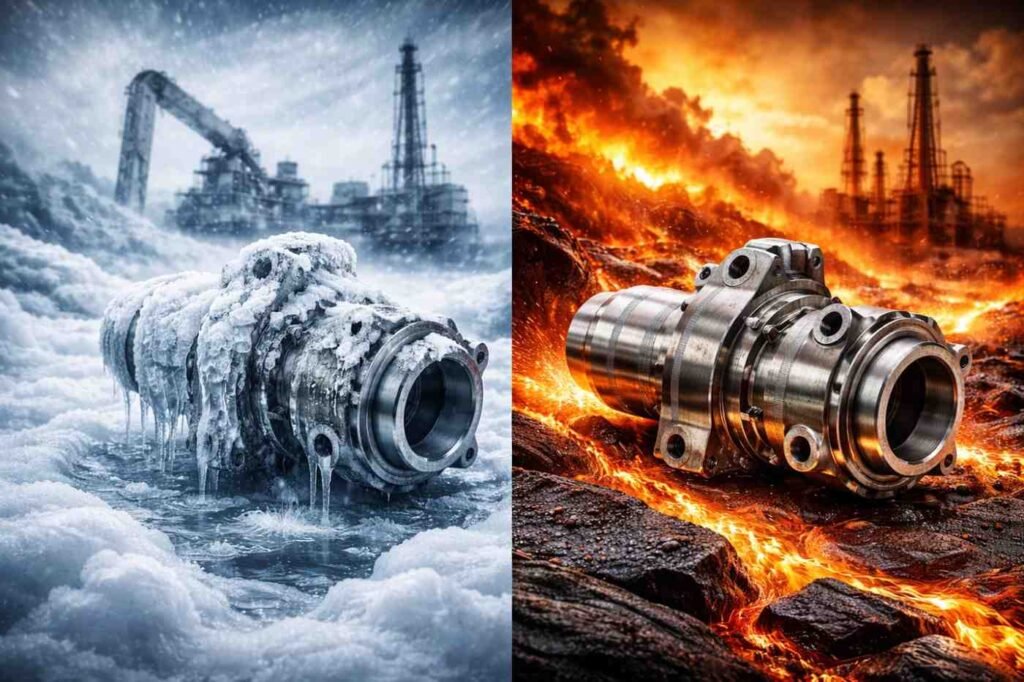
Standard parts are typically manufactured using common materials like standard grades of carbon steel, aluminum, or basic plastics. While these materials perform adequately in a controlled factory environment or typical consumer electronics, they often crumble under extreme conditions. Industries such as oil and gas, aerospace, and deep-sea exploration operate in environments where temperatures can swing from freezing to scorching in minutes, or where components are subjected to immense pressure and corrosive chemicals.
For example, a standard stainless steel valve might survive a kitchen appliance but will fail rapidly if exposed to the high-sulfur environment of a sour gas well. In these scenarios, the generic material composition of a standard part lacks the necessary grain structure or alloy blend to resist stress corrosion cracking or thermal fatigue.
Solving this requires components made from superalloys like Inconel or Hastelloy, processed with specific heat treatments that standard manufacturers do not offer. If your application involves surviving the vacuum of space or the pressure of the ocean floor, off-the-shelf options are a liability rather than a convenience.
2. Strict High-Precision Tolerances
Mass-produced parts are made to “commercial tolerances.” This means there is an acceptable margin of error in the dimensions of the part, which keeps production speeds high and costs low. For a lawnmower or a desk chair, a variance of a few thousandths of an inch makes no difference. However, in high-precision industries like medical device manufacturing or semiconductor fabrication, even a microscopic deviation can render a machine useless or dangerous.
When a mechanical assembly requires a perfect fit—such as a piston in a high-performance hydraulic pump—standard parts often result in leaks, vibration, or premature wear. The gap between commercial tolerance and precision tolerance is vast.
Achieving the latter often requires specialty machining processes that can hold tolerances to the micron level. This level of exactness ensures that components interact seamlessly without friction or misalignment, a feat that standard catalog items simply cannot replicate.
3. Unique Geometric Constraints and Space Limitations
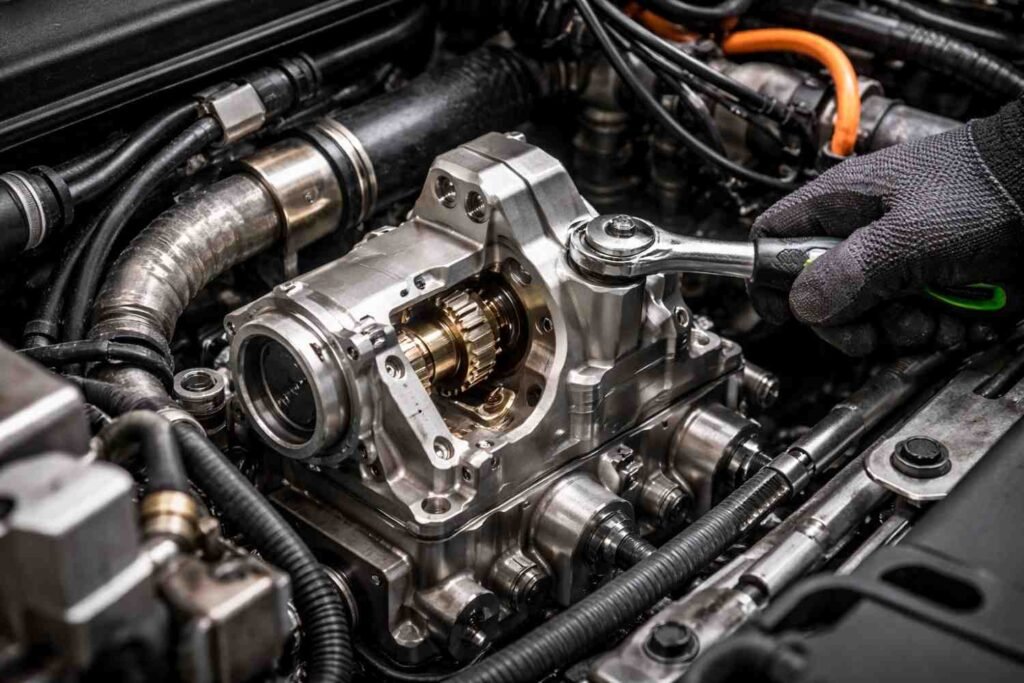
As technology advances, devices are becoming smaller, sleeker, and more compact. The trend toward miniaturization in electronics, automotive sensors, and robotics forces engineers to pack more functionality into tighter spaces. Standard parts, by their nature, adhere to standardized shapes and sizes (like ISO or ANSI standards). These rigid dimensions often become the limiting factor in innovative design.
Imagine designing a robotic arm that needs to articulate inside a cramped engine bay. A standard gear or linkage might be too bulky or shaped incorrectly to clear the surrounding components. Trying to force a standard part into a non-standard space often leads to compromised designs, such as adding unnecessary weight or increasing the overall footprint of the device.
Custom manufacturing solves this by allowing engineers to design the component to fit the space, rather than designing the space to fit the component. This allows for complex geometries, odd angles, and multi-functional parts that standard manufacturing lines are not equipped to produce.
4. Maintenance of Legacy Equipment
One of the most frustrating challenges in manufacturing is maintaining “legacy” machinery—equipment that is older but still vital to the production line. Many factories rely on heavy machinery built 30, 40, or even 50 years ago. These machines were built to last, but their individual components were not. The original equipment manufacturer (OEM) may have gone out of business decades ago, or they may have simply stopped producing parts for obsolete models.
When a critical shaft or gear breaks on a legacy machine, finding a standard replacement is often impossible because modern standards have shifted. You cannot simply buy a 1970s-spec gear from a 2024 catalog. In this situation, standard parts are useless.
The solution lies in reverse engineering, where the broken part is measured and analyzed to create a custom reproduction. This process not only restores the machine to working order but can often improve it by using modern materials that are superior to the original 1970s steel.
5. Specific Weight-to-Strength Requirements
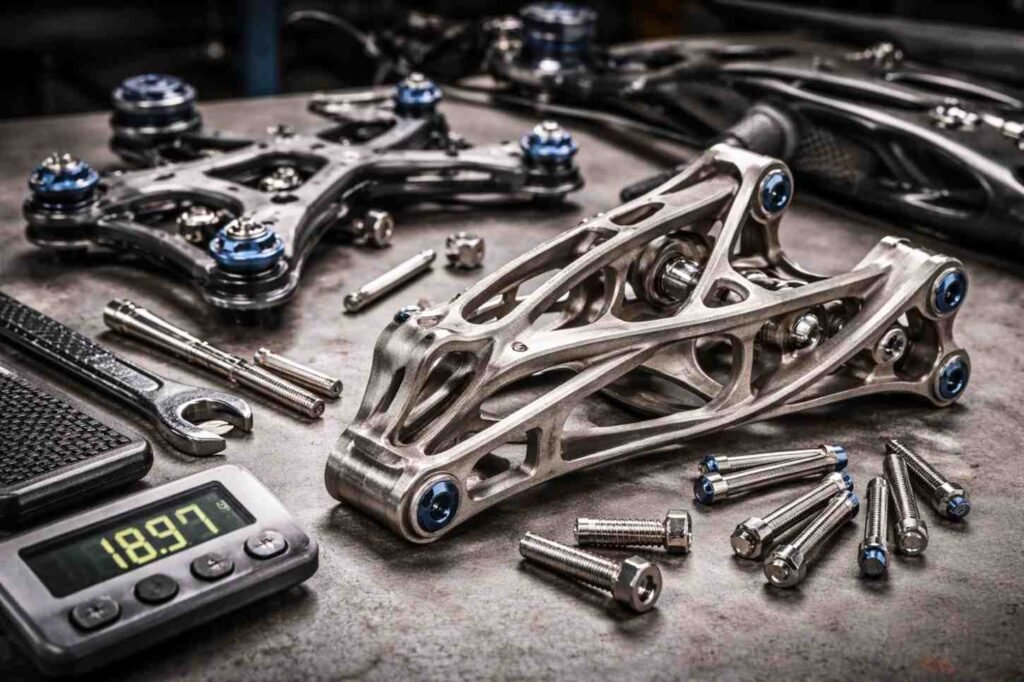
In the automotive and aerospace sectors, weight is the enemy of efficiency. Every ounce shaved off a vehicle translates to better fuel economy or greater payload capacity. Standard fasteners and structural components are usually over-engineered for safety because the manufacturer doesn’t know how they will be used. This results in parts that are heavier than necessary for specific applications.
If an engineer is designing a drone frame or a high-performance racing suspension, a standard steel bolt might provide the required strength but add unacceptable weight. Conversely, a standard aluminum bolt might be light enough but lack the tensile strength to survive high-G cornering.
Standard parts force a compromise between weight and strength. Custom solutions allow for the removal of excess material through techniques like topology optimization, or the use of advanced composites and titanium, providing the exact strength required with minimal mass.
While standard parts will always have a place in general assembly and cost-sensitive projects, they are rarely the answer to complex engineering hurdles. Whether you are dealing with extreme heat, microscopic tolerances, or the need to keep a vintage machine running, the limitations of off-the-shelf components can stall progress and inflate long-term costs.
Recognizing when to move away from the catalog and toward a tailored solution is a hallmark of efficient, high-quality manufacturing. If your current components are limiting your design potential or failing prematurely, it is time to explore custom options that are engineered specifically for your success.