

If you’ve ever wondered how to cook ahi tuna steaks so they turn out perfectly tender, pink in the center, and beautifully seared on the edges, you’re in the right place. Ahi tuna is naturally lean, packed with flavor, and cooks incredibly fast—making it one of the easiest restaurant-quality dishes you can make at home. The secret lies in the prep, the heat, and the timing. This guide walks you through everything you need to know, from choosing quality tuna to serving it like a pro.
What Makes Ahi Tuna So Unique?
Ahi (also known as yellowfin tuna) has a mild, clean flavor and a firm texture that stays tender even when served rare. Unlike many other fish, ahi tuna is best cooked very quickly to avoid drying it out. This is why chefs prefer a hot sear with a cool center.
Because ahi is often served rare or medium-rare, choosing high-quality, sushi-grade tuna is essential. Fresh ahi should look vibrant red, feel firm, and smell clean and oceanic—not sour or “fishy.”
How to Choose and Prepare Ahi Tuna Steaks
Cooking great ahi tuna starts before the pan even heats up. Good preparation ensures a perfect sear and buttery interior.
Choose High-Quality Tuna
Pick sushi-grade or sashimi-grade steaks for rare cooking. Look for:
- Deep red color
- Firm, tight texture
- No brown patches or gaps between fibers
Frozen tuna is also excellent when properly thawed and dried.
Thaw and Dry Well
If using frozen steaks, thaw overnight in the refrigerator or submerge the sealed bag in cold water for about 20–30 minutes. Pat the steaks completely dry with paper towels. Excess moisture prevents browning.
Bring to Room Temperature
Let the tuna rest on the counter for 15–20 minutes before cooking.
This prevents a cold center and helps the fish sear evenly.
Season Simply
Ahi tuna shines with minimal seasoning. Coat lightly with a high-smoke-point oil such as avocado, peanut, or canola oil. Season generously with:
- Salt
- Cracked pepper
- Optional: sesame seeds, blackened seasoning, or chili flakes
Ahi tuna has a subtle flavor, so a simple crust highlights its natural richness.
How to Cook Ahi Tuna Steaks: The Best Sear Method
The most reliable method is a quick sear in a very hot pan, giving you a crisp exterior and a rare to medium-rare center.
Heat the Pan Properly
Use a heavy-bottomed skillet, ideally cast iron. Heat it over medium-high or high heat until it’s almost smoking.
Add just enough oil to coat the bottom.
Sear the Tuna
Carefully place the steak into the hot pan.
Cook times:
- Rare: 30 seconds to 1 minute per side
- Medium-rare: 1 to 1.5 minutes per side
Use tongs to sear the edges for about 20–30 seconds total.
Avoid overcooking. Ahi tuna turns dry quickly once it passes medium doneness.
Check Doneness
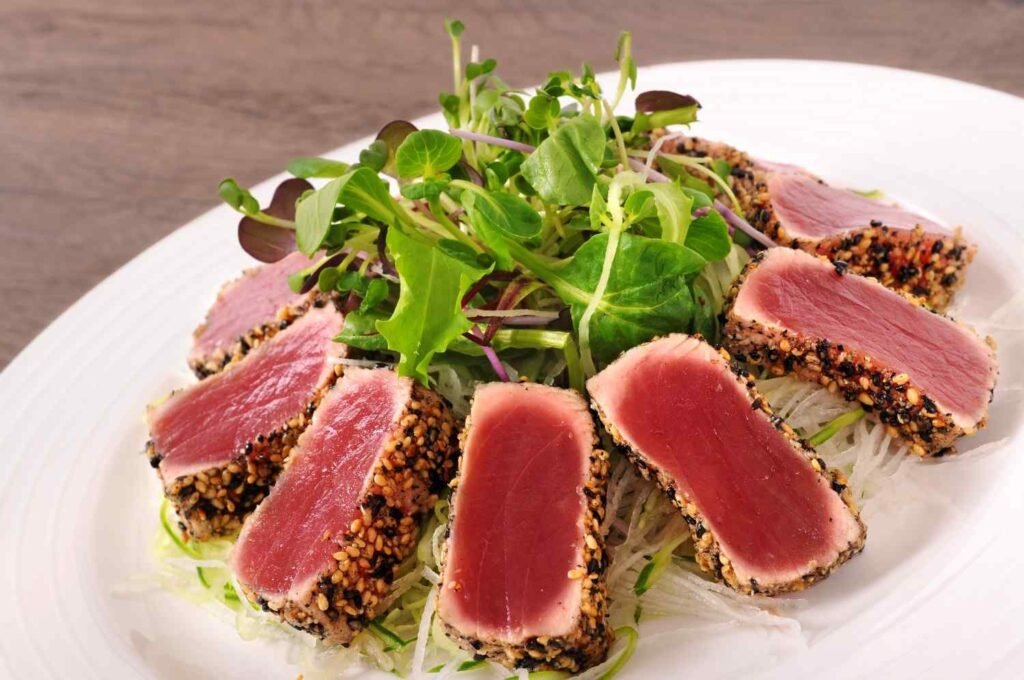
Look for:
- A thin cooked layer on the outside
- A vibrant red-to-pink center
For precise cooking, use a food thermometer.
Target internal temperatures:
- Rare: 115–120°F
- Medium-rare: 125–130°F
Rest and Slice
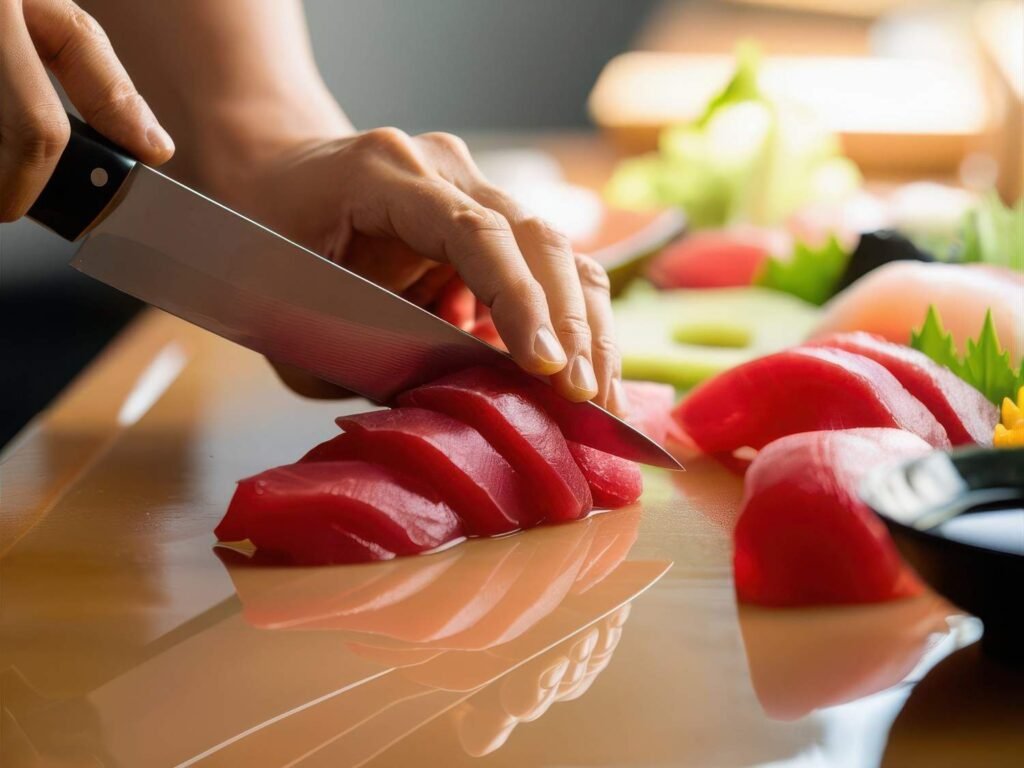
Let the tuna rest on a cutting board for 3–5 minutes.
Slice against the grain with a sharp knife to keep each piece tender.
Quick Comparison: Ahi Tuna Cooking Methods
| Method | Best For | Cook Time | Result | Notes |
| Pan-Searing | Rare / Medium-rare | 1–3 minutes | Crispy edges, cool pink center | Most popular, restaurant-quality |
| Grilling | Rare / Medium | 2–4 minutes | Smoky flavor, good sear | Preheat grill to 450–500°F |
| Air Fryer | Medium / Well-done | 4–6 minutes | Fully cooked | Not ideal for rare lovers |
| Sous Vide + Sear | Perfect even pink | 30–45 min + 1 min sear | Precise, tender | Best control over doneness |
Pan-searing is the top choice for flavor, texture, and speed.
Expert Tips for the Best Ahi Tuna
Use High Heat Only
A lukewarm pan will steam, not sear.
Preheat thoroughly before adding the fish.
Avoid Over-Marinating
Ahi can break down fast in acidic marinades.
If using soy sauce, ginger, garlic, or citrus, limit marinating to 5–10 minutes.
Use High-Smoke-Point Oils
Olive oil burns easily. Use:
- Avocado oil
- Peanut oil
- Canola oil
- Grapeseed oil
This keeps the sear clean and prevents bitterness.
Do Not Overcrowd the Pan
Cook one or two steaks at a time.
Overcrowding lowers the pan temperature and ruins the crust.
Let It Rest Before Slicing
Tuna continues cooking slightly after leaving the pan.
Resting ensures even finishing and juicy slices.
Flavor Variations to Try
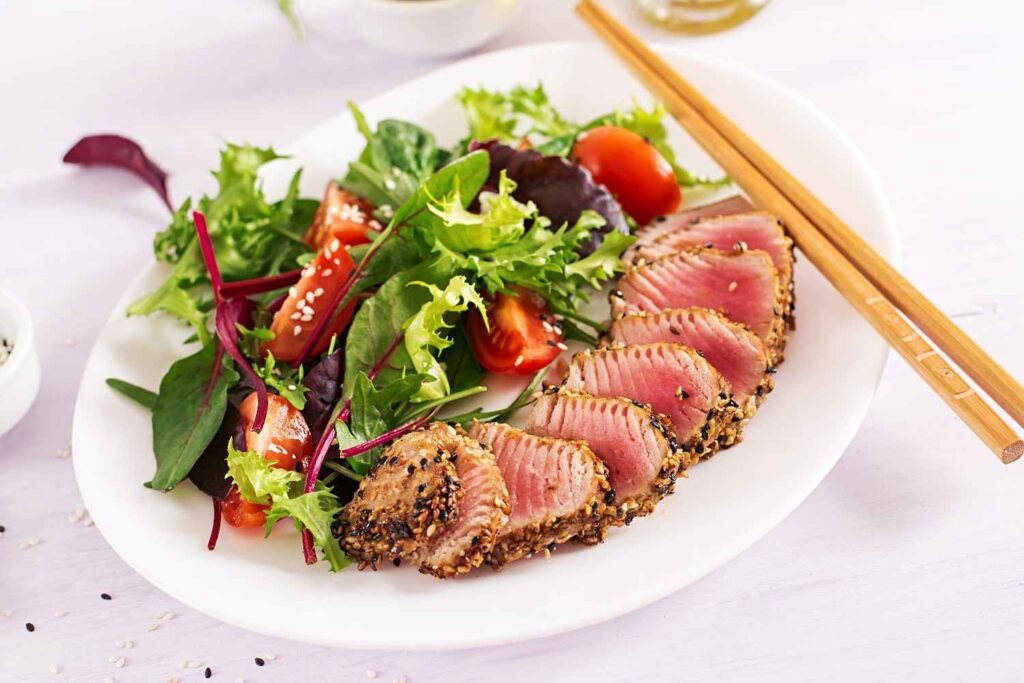
Sesame-Crusted Ahi Tuna
Press sesame seeds onto the seasoned steaks before searing.
Serve with soy sauce, pickled ginger, and a drizzle of sesame oil.
Blackened Ahi Tuna
Use a Cajun-style rub with paprika, garlic powder, onion powder, and cayenne.
This gives a smoky, spicy crust.
Asian-Inspired Ahi
Brush with:
- Soy sauce
- Grated ginger
- Garlic
- A touch of honey
Sear quickly to create a caramelized edge.
Mediterranean Style
Season with salt, pepper, olive oil, lemon zest, and oregano.
Serve with a fresh tomato-caper relish.
Serving Suggestions
Once your ahi tuna is sliced, here are ways to serve it:
As Sashimi-Style Slices
Serve with soy sauce, wasabi, and a squeeze of lime.
In Rice or Poke Bowls
Pair with rice, cucumber, seaweed, avocado, sesame seeds, and ponzu.
On Salads
Layer over greens with a sesame vinaigrette or citrus dressing.
With Fresh Salsas
Top with mango salsa, pineapple relish, or chimichurri for a bright finish.
Common Mistakes to Avoid
- Cooking too long, resulting in dryness
- Using olive oil at high heat
- Not drying the tuna thoroughly before searing
- Flipping too early (wait for the crust to set)
- Starting with cold tuna straight from the fridge
Simple fixes make a dramatic difference in the final texture.
Frequently Asked Questions
1. Can you eat ahi tuna steaks rare?
Yes. As long as you use sushi-grade ahi tuna from a reputable source, it is safe and commonly served rare or medium-rare. Always avoid consuming raw or rare fish if you are immunocompromised or pregnant.
2. How do you know when ahi tuna is done?
Ahi tuna is done when the outside is seared and the center remains pink. For medium-rare, the internal temperature should reach about 125–130°F.
3. Should ahi tuna be marinated?
Short marinades of 5–10 minutes work well. Long marinades can make the texture mushy. Ahi tuna benefits from a simple seasoning rather than heavy marination.
4. How thick should ahi tuna steaks be for searing?
Ideal thickness is 1 to 1.5 inches. Thinner steaks cook too fast and may overcook before forming a crust.
5. How long can cooked ahi tuna last in the fridge?
Store cooked tuna in an airtight container for up to 2 days. It is best enjoyed fresh on the same day.
Conclusion
Learning how to cook ahi tuna steaks is all about controlling heat, time, and preparation. With a high-quality tuna steak, a blazing hot pan, and a quick sear, you can achieve a restaurant-quality dish in minutes. Whether you enjoy it rare, medium-rare, or fully cooked, ahi tuna offers incredible versatility and flavor. With the tips and variations shared here, you can confidently prepare this elegant seafood favorite anytime.
